montane rainforest, roughly 11 km, 5–6 hours
Elevation: 1,640m to 2,835m
Distance: 11km
Hiking Time: 5-7 hours
Terrain: Rainforest trail with muddy sections
Tanzania’s parks offer diverse wildlife and landscapes, from the Serengeti plains to Kitulo’s highlands..
This trek follows a scenic route with a strong chance of reaching the summit, passing through five climate zones..
Enjoy a refreshing hike through Pugu Hills, surrounded by forested trails and rolling landscapes..
The Everest Base Camp trek can be done via different routes, including the classic Lukla trail, Gokyo Lakes..
Zanzibar offers white-sand beaches, coral reefs, and vibrant culture. Enjoy swimming, snorkeling..
This trek follows a scenic route with gradual acclimatization, passing through alpine meadows..
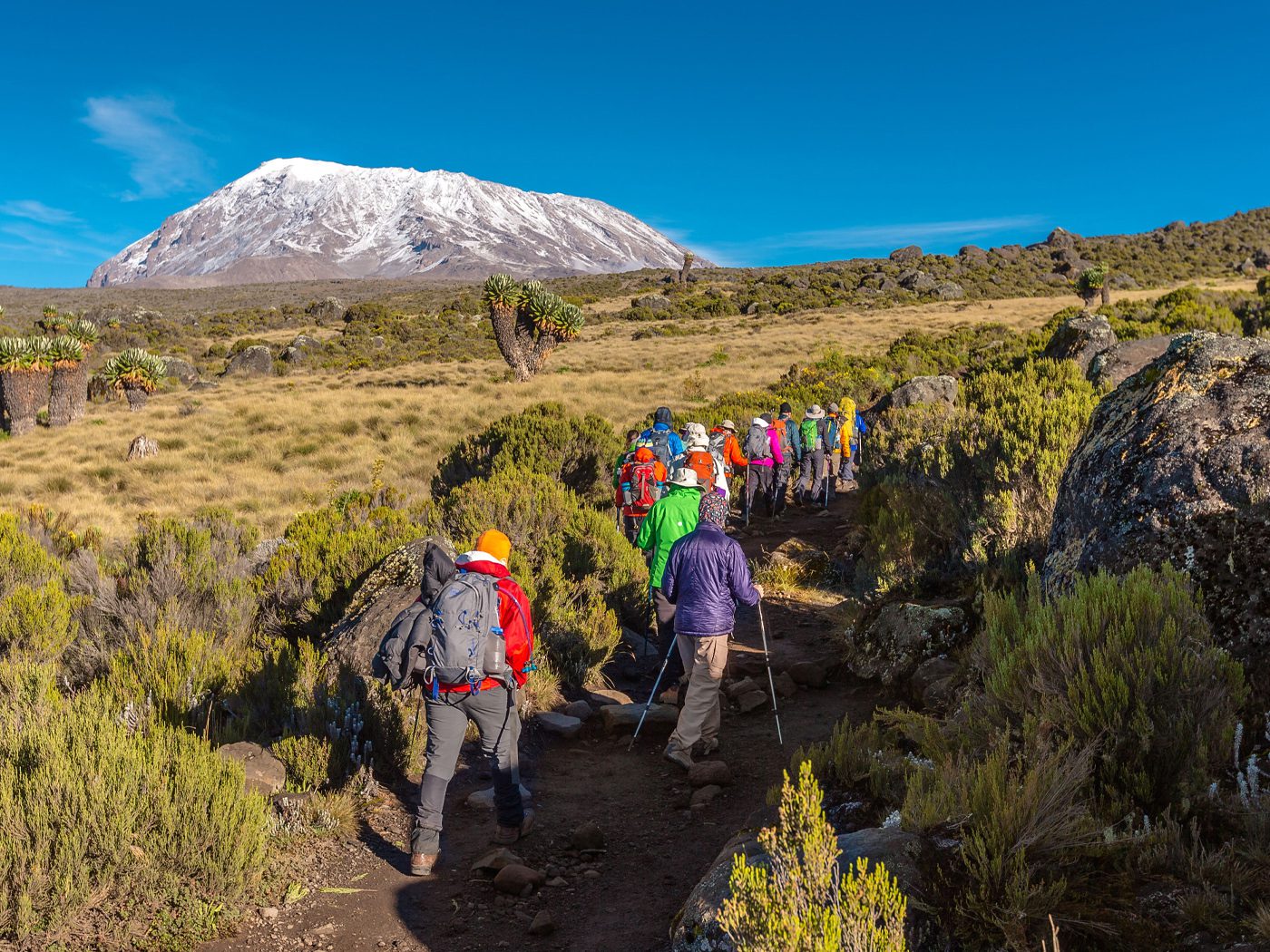
Climb through lush rainforest, alpine moorland, and lunar-like scree before reaching Uhuru Peak, the highest point in Africa. Kilimanjaro is a non-technical trek, which makes it one of the most achievable of the Seven Summits.

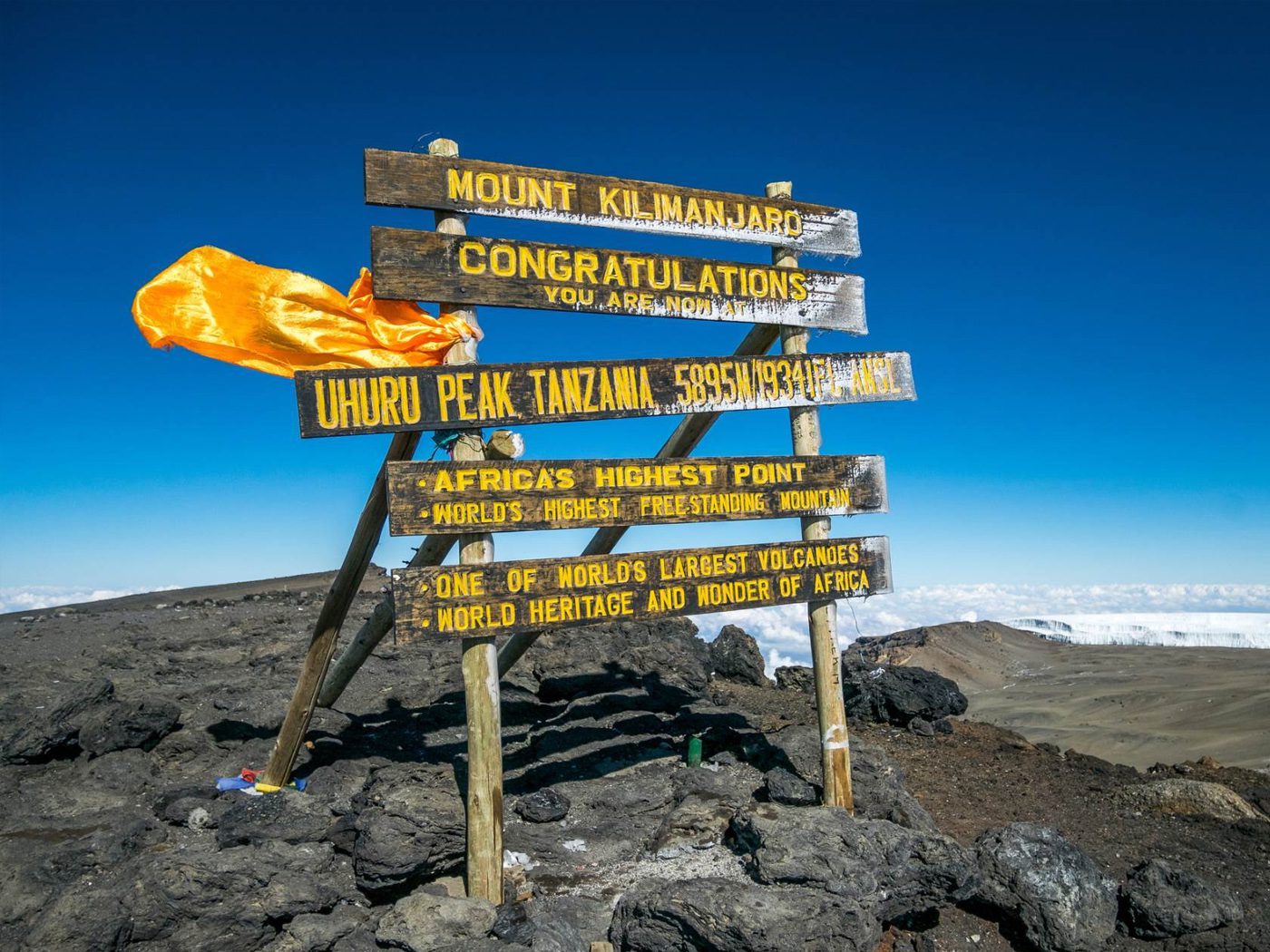
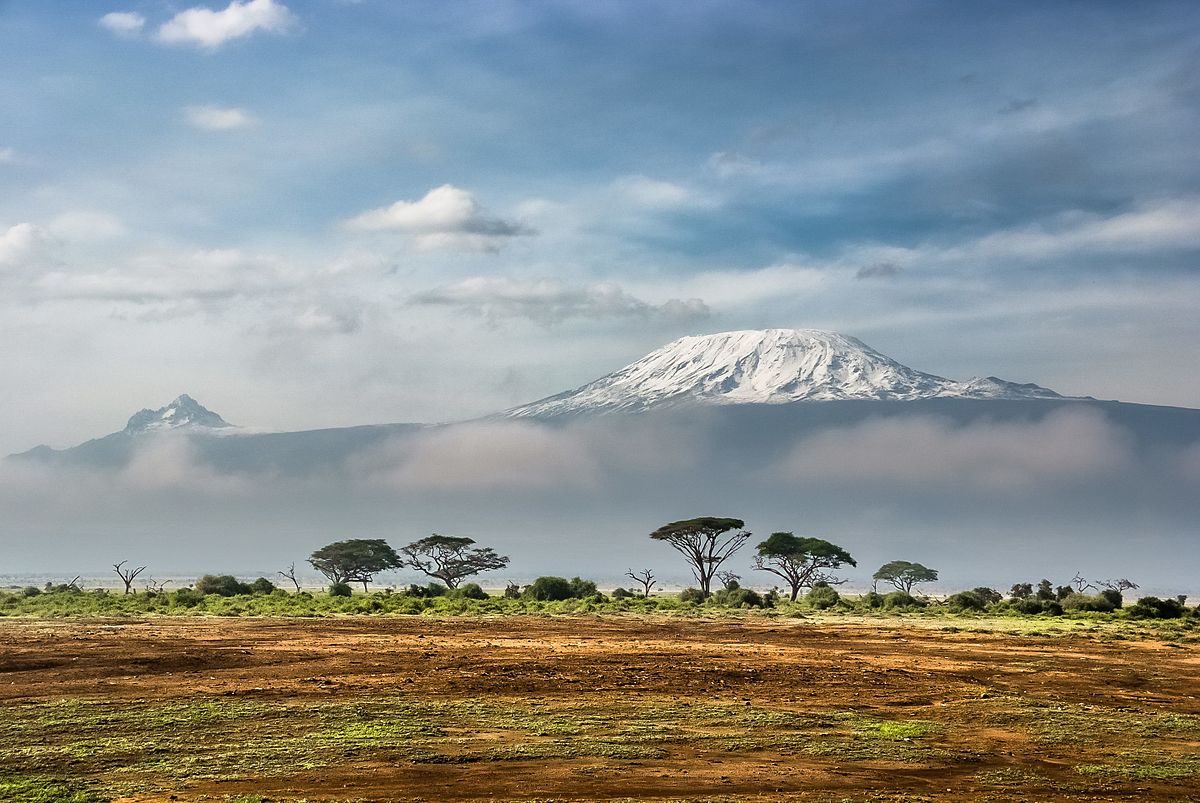
Mount Kilimanjaro stands as Africa's highest peak at 5,895 meters (19,341 feet), offering one of the world's most accessible high-altitude trekking experiences. Located in Tanzania near the Kenyan border, this dormant volcano attracts thousands of climbers annually who seek to reach Uhuru Peak, the highest point on the African continent.
The mountain features three main volcanic cones: Kibo (the highest), Mawenzi, and Shira. What makes Kilimanjaro unique is that it can be climbed without technical mountaineering skills, though it demands good physical fitness, mental determination, and proper acclimatization.
Kilimanjaro sits in northern Tanzania near the towns of Moshi and Arusha, and it dominates the horizon for miles before you reach the base. The mountain is a dormant stratovolcano made up of three volcanic cones, Kibo, Mawenzi, and Shira, with Kibo carrying the summit. Because the terrain changes so quickly with altitude, a week on Kilimanjaro can feel like crossing several countries. You start under forest canopy, move through heather and moorland, cross a stark alpine desert, and finish on ice and volcanic scree near the crater rim.
Guides set a deliberately slow pace to help the body adjust to falling oxygen levels, and this pacing, more than raw fitness, decides who reaches the top. Most itineraries build in at least one extra acclimatization day, and the longer routes tend to post better summit rates for exactly that reason.
Itineraries can run shorter or longer depending on route and acclimatization needs.
montane rainforest, roughly 11 km, 5–6 hours
Elevation: 1,640m to 2,835m
Distance: 11km
Hiking Time: 5-7 hours
Terrain: Rainforest trail with muddy sections
climb into moorland, roughly 5 km, 4–5 hours
Elevation: 2,835m to 3,750m
Distance: 5km
Hiking Time: 4-6 hours
Terrain: Steep rocky ridge, moorland zone
An acclimatization loop to 4,600 m before dropping back down to sleep lower, roughly 10 km, 5–6 hours.
Elevation: 3,750m to 4,630m to 3,960m
Distance: 10km
Hiking Time: 6-8 hours
Terrain: Alpine desert, acclimatization day
Includes the Barranco Wall scramble, roughly 6 km, 4–5 hours.
Elevation: 3,960m to 4,035m
Distance: 5km
Hiking Time: 4-5 hours
Terrain: Barranco Wall climb, alpine desert
short trekking day to the summit staging camp, roughly 4 km, 3–4 hours.
Elevation: 4,035m to 4,640m
Distance: 4km
Hiking Time: 4-5 hours
Terrain: Rocky, sparse vegetation
The summit push starts around midnight, roughly 15–16 km total.
Elevation: 4,640m to 5,895m to 3,080m
Distance: 5km up, 12km down
Hiking Time: 10-16 hours total
Summit attempt starts around midnight
Descend through the rainforest to the park exit.
Elevation: 3,080m to 1,640m
Distance: 10km
Hiking Time: 3-4 hours
Terrain: Rainforest descent
Kilimanjaro International Airport is the main gateway and sits roughly 45 minutes from Moshi, the usual base town for climbers. Julius Nyerere International Airport in Dar es Salaam and Zanzibar’s Abeid Amani Karume International Airport both connect onward to Kilimanjaro or Arusha by short domestic flight or road transfer. Travelers from India, the UK, or the US typically connect through Nairobi, Addis Ababa, Doha, or Dubai, since direct flights to Kilimanjaro from these regions are limited.
Dry Seasons (Recommended):
January to March: Clear skies, cold temperatures
June to October: Most popular, moderate temperatures
Wet Seasons (Challenging):
April to May: Heavy rains, muddy trails
November to December: Short rains, fewer crowds
Good cardiovascular fitness essential
Ability to hike 6-8 hours daily
Regular training 3-6 months prior recommended
Focus on cardio, strength, and hiking with a pack
Affects 50-70% of climbers to some degree
Symptoms: headache, nausea, fatigue, dizziness
Prevention: slow ascent, proper hydration, listen to your body
Diamox (acetazolamide) may help (consult doctor)
Essential items:
Insulated sleeping bag (-10°C rating)
Waterproof jacket and pants
Insulating layers (fleece/down)
Hiking boots (well broken-in)
Warm hat and sun hat
Sunglasses and sunscreen
Headlamp with extra batteries
Water bottles/hydration system
Technical difficulty: Non-technical, hiking only
Physical difficulty: Moderate to challenging
Success rates: 60-70% overall (varies by route)
Main challenges: Altitude, weather, mental endurance
Yes, guides are mandatory by park regulations
Guides provide safety, navigation, and cultural insights
Porter support is standard and helps local economy
Basic pit latrines at designated camps
Portable toilet tents available for premium packages
Bring personal hygiene items and hand sanitizer
Minimum age: 10 years old
Parental consent and medical clearance required
Consider child's maturity and physical capability
Shorter routes not recommended for young climbers
Guides prioritize safety over summit success
Common turn-around points: Stella Point, Gilman's Point
Partial refunds typically not available
Consider travel insurance for medical evacuations
Physical preparation:
Start training 3-6 months in advance
Focus on cardio: running, cycling, swimming
Include strength training and flexibility work
Practice hiking with a weighted pack
Mental preparation:
Research the challenge thoroughly
Set realistic expectations
Develop positive mantras and coping strategies
Prepare for discomfort and fatigue
“We had an outstanding experience with Meenu Andria from Unforgettable Escapades, who coordinated our Mount Kilimanjaro climb through a business partnership with ZAFS Tours. From the very beginning, Meenu’s professionalism and passion for creating memorable travel experiences truly stood out.”
— Uthayakumar Geevaran


WhatsApp us
