
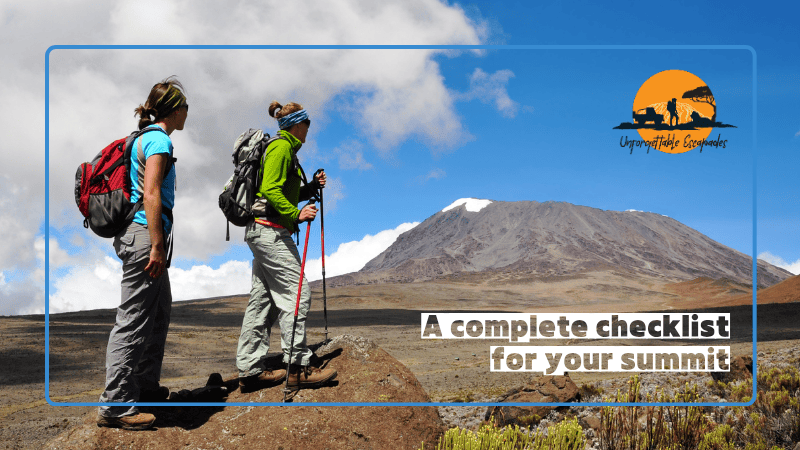
Tomorrow you start climbing the highest mountain in Africa. Tonight, your job is simpler but just as important: get everything right so your body and your gear are ready when that alarm goes off.
Kilimanjaro stands at 5,895 metres, and thousands of trekkers reach that summit sign every year. You don’t need ropes or ice axes to get there. You need a plan, a calm mind, and a checklist you actually follow. Here’s what that checklist looks like.
Pack Your Bag Like Tomorrow’s Already Happening
Nothing kills pre-climb calm like rummaging through a duffel bag at 5am. Sort your gear tonight so morning is just zip-and-go.
Your porters carry the big duffel. You carry the daypack, and that’s the one that needs real thought. Load it up with:
- Waterproof jacket
- Warm fleece or insulated layer
- Water bottles or hydration bladder
- Headlamp with spare batteries
- Sunscreen and lip balm
- Sunglasses
- Snacks
- Camera or phone
- Personal medications
- Passport copy and travel documents
Lay out your boots, poles, gloves, and rain gear too. Every item you check off tonight is one less thing to panic about tomorrow.
Drink Water Like Your Summit Depends On It (It Kind Of Does)
Altitude sickness doesn’t care how fit you are. It cares whether your body has enough fluid to cope with thinner air, and that battle starts the night before you even reach the trailhead.
Keep sipping water through the evening. Skip the temptation to chug a bottle right before bed since you’ll just be up all night for the wrong reasons. Go easy on alcohol too. It dehydrates you and wrecks your sleep, and you need both hydration and rest working in your favour.
Eat Something Your Body Can Actually Use
Your dinner tonight is fuel, not comfort food. Most lodges near Kilimanjaro know this and build their climber menus around it.
Good options on the table:
- Rice or pasta
- Potatoes
- Lean chicken or fish
- Fresh vegetables
- Fruit
Carbs top up your energy stores, protein helps your muscles recover from the walk ahead. Skip anything too spicy or too heavy. Your stomach will thank you somewhere around hour three of tomorrow’s trek.
Let Yourself Rest, Even If Sleep Won’t Come
You’re probably too wired to sleep well, and that’s normal. Nearly every climber lies awake the night before, running through the trail in their head.
The fix isn’t forcing sleep. It’s giving your body a real chance to recover. Finish your packing early, put the phone down earlier than usual, and just lie there and let your muscles settle. Even a few hours of proper rest beats a night of restless scrolling.
Sit In on the Guide Briefing and Actually Listen
This meeting is one of the biggest perks of climbing with a proper operator instead of going it alone. Your guide walks you through exactly what day one looks like, so you’re not stepping onto the trail blind.
Expect them to cover:
- Daily trekking schedule
- Weather conditions to expect
- Trail difficulty
- Safety procedures
- Park regulations
- Altitude awareness
- Equipment checks
Ask questions. These guides have summited more times than they can count, and their advice tonight could make the difference on your climb tomorrow.
Plug In Everything You Own
Once you’re on the mountain, power outlets stop existing. There’s no wall socket at 4,000 metres, so tonight is your last shot at a full charge.
Get these on the charger before bed:
- Mobile phone
- Camera
- GPS watch or smartwatch
- Power bank
- Headlamp batteries
Uhuru Peak at sunrise is the kind of view you’ll want on camera. Don’t let a dead battery be the reason you missed it.
Learn the Phrase That Gets Climbers to the Top: Pole Pole
If you take one lesson from Kilimanjaro veterans, make it this Swahili phrase: pole pole, slowly, slowly.
New climbers almost always want to push the pace, convinced that speed gets them to camp faster and gives them more rest time. Guides who’ve done this hundreds of times know better. A slow, steady rhythm helps your body acclimatise, saves your energy for summit night, and dramatically improves your odds of actually reaching the top.
Before you close your eyes tonight, stop thinking about the summit for a minute. Think about the rainforest, the moorland, the alpine desert, the glaciers. That’s the walk you’re about to take, and it deserves your full attention, not just your finish line.
The Adventure Doesn’t Have to End at Uhuru Peak
Plenty of climbers come down off the mountain and head straight into a Tanzania safari. The Serengeti’s open plains, the crater floor at Ngorongoro, the elephants of Tarangire, the lake views at Manyara: this country has as much waiting for you on the ground as it does at altitude.
Pairing a Mount Kilimanjaro climbing tour with a safari means you get Tanzania at its two extremes, the highest point in Africa and some of its richest wildlife country, in a single trip.
Climb With People Who’ve Done This Before
Picking the right operator matters just as much as your own preparation. A good one brings experienced guides, trained porters, solid camping gear, proper meals, daily health checks, and safety support that doesn’t waver when conditions get tough.
At Unforgettable Escapades, that’s the standard we hold ourselves to. Our guided Kilimanjaro treks, Tanzania safari tours, and Zanzibar getaways are built around one goal: getting you there and back safely, with a story worth telling. If the summit is calling you, we’re ready to help you answer it.


Comments are closed